


How To Export Spices From India: A Step-By-Step Guide
Indian spices are renowned worldwide for their rich aroma, flavor, and health benefits. If you’re planning to tap into the global spice market, spice export from India offers an incredible opportunity. In this guide, we’ll walk you through the step-by-step process of exporting spices from India, the documents required, and tips to run a successful spice export business.
Overview of the Spice Export Market
India is the world’s largest producer and exporter of spices, contributing over 70% to the global spice demand. Major markets include the USA, the UAE, the UK, Germany, and Malaysia. Moreover, the Spices Board of India and APEDA regulate the export of Indian spices, ensuring quality and authenticity.
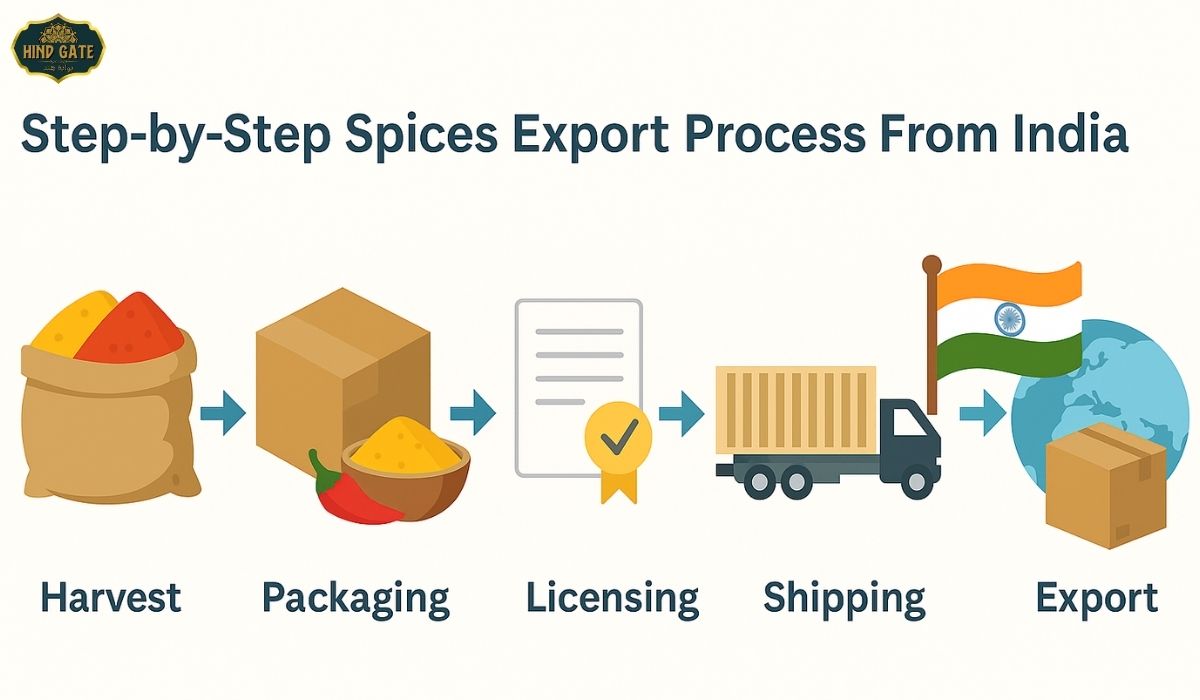
Step-by-Step Spices Export Process From India
Here’s a simplified step-by-step guide to export spices from India:
Step 1: Register Your Business
Start by registering your spice export company as a sole proprietorship, partnership, LLP, or private limited company.
Step 2: Obtain an Importer Exporter Code (IEC)
This 10-digit code is mandatory for any export business and is issued by DGFT (Directorate General of Foreign Trade).
Step 3: Get FSSAI License
The Food Safety and Standards Authority of India (FSSAI) license is essential for exporting food products like spices.
Step 4: Register with APEDA
The Agricultural and Processed Food Products Export Development Authority (APEDA) promotes spices export and provides certification and support.
Step 5: Register with the Spices Board of India
This is mandatory for all spice exporters. You’ll receive a CRES (Certificate of Registration as Exporter of Spices).
Step 6: Find Buyers and Set Trade Terms
Use B2B platforms, trade expos, or export promotion councils to connect with buyers. Negotiate payment terms, shipping methods, and quality standards.
Step 7: Packaging and Labeling
Use food-grade, moisture-proof packaging that complies with international standards. Label clearly with batch number, expiry date, and country of origin.
Step 8: Customs Clearance and Shipping
Hire a licensed customs agent to handle export declarations. Ship using air freight or sea cargo depending on urgency and volume.
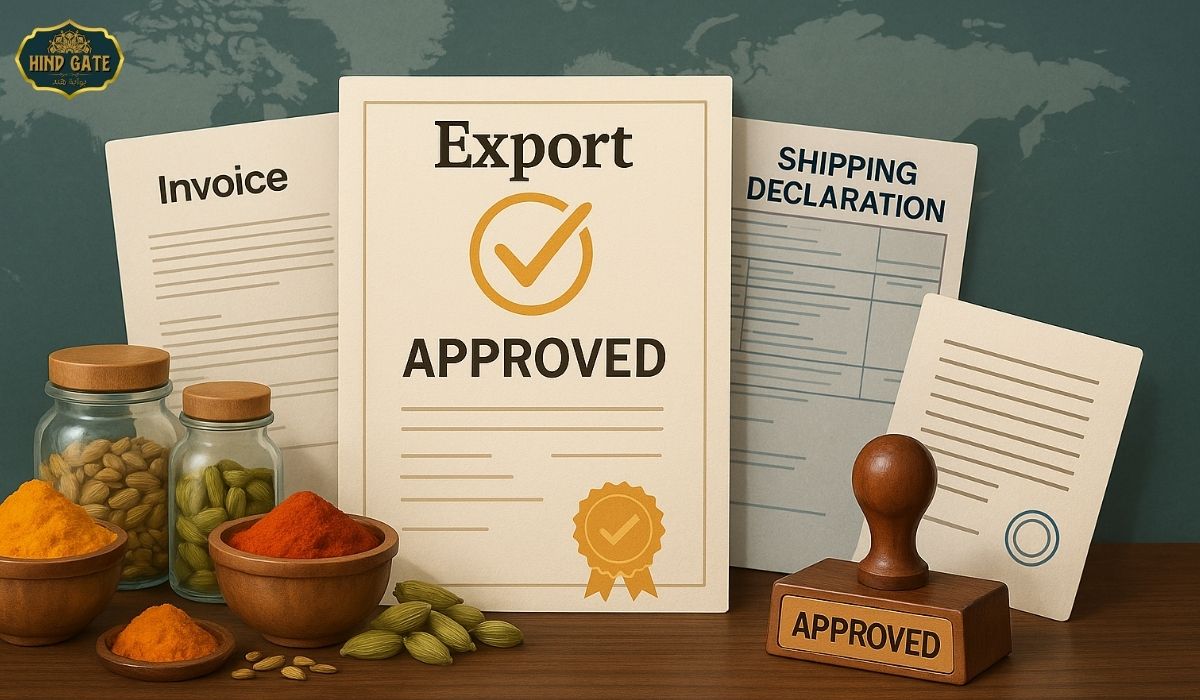
Documents Required to Export Spices from India
To legally export spices from India, you need the following documentation:
- Import Export Code (IEC)
- GST Registration Certificate
- FSSAI License
- APEDA Registration
- Spices Board CRES Certificate
- Commercial Invoice
- Packing List
- Bill of Lading or Airway Bill
- Certificate of Origin
- Phytosanitary Certificate (for certain markets)
- Letter of Credit or Purchase Order
For help obtaining these documents, visit our Spices Export Services page.
Spice Export License in India: How to Get Started
The most crucial licenses for spice export are:
- IEC Code: Apply via DGFT portal.
- FSSAI License: Apply through foscos.fssai.gov.in.
- APEDA Registration: Apply at apeda.gov.in.
- Spices Board Registration: Apply on indianspices.com.
Need help applying? Get expert support on our Spices page.
Registering with APEDA for Spice Export
APEDA promotes agricultural exports and provides financial assistance, training, and quality certifications. However, it is essential for anyone who intends to export spices from India. The registration is valid for 5 years and should be renewed on time.
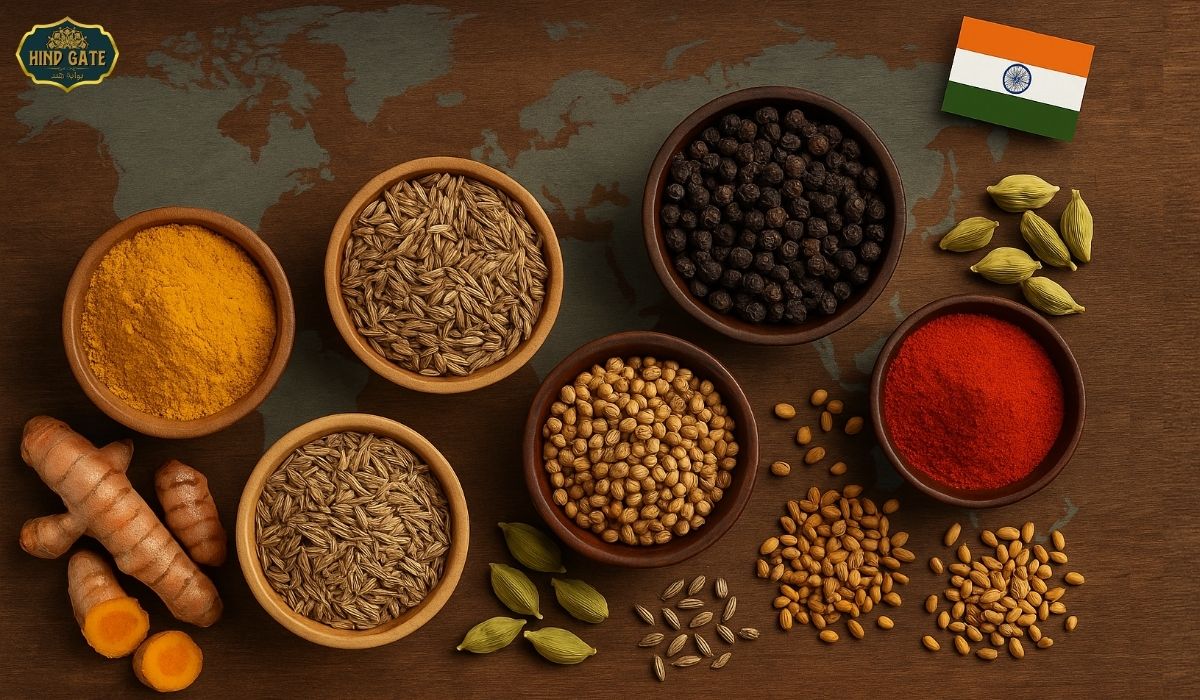
Top Spices Exported from India
- Turmeric
- Cumin
- Black Pepper
- Cardamom
- Coriander
- Fennel Seeds
- Fenugreek
- Chili Powder
Additionally, these spices are highly demanded on international markets and are available in whole, powdered, and oil-extracted forms.
Finding International Buyers for Indian Spices
Here’s how you can find spice buyers overseas:
- Register on B2B platforms like Alibaba, Indiamart, and TradeIndia
- Join export promotion councils like FIEO and Spices Board of India
- Attend international trade fairs and exhibitions
- Use LinkedIn and email outreach
- Partner with export agents or buying houses
Our Spices Export Services can help you connect with verified buyers.
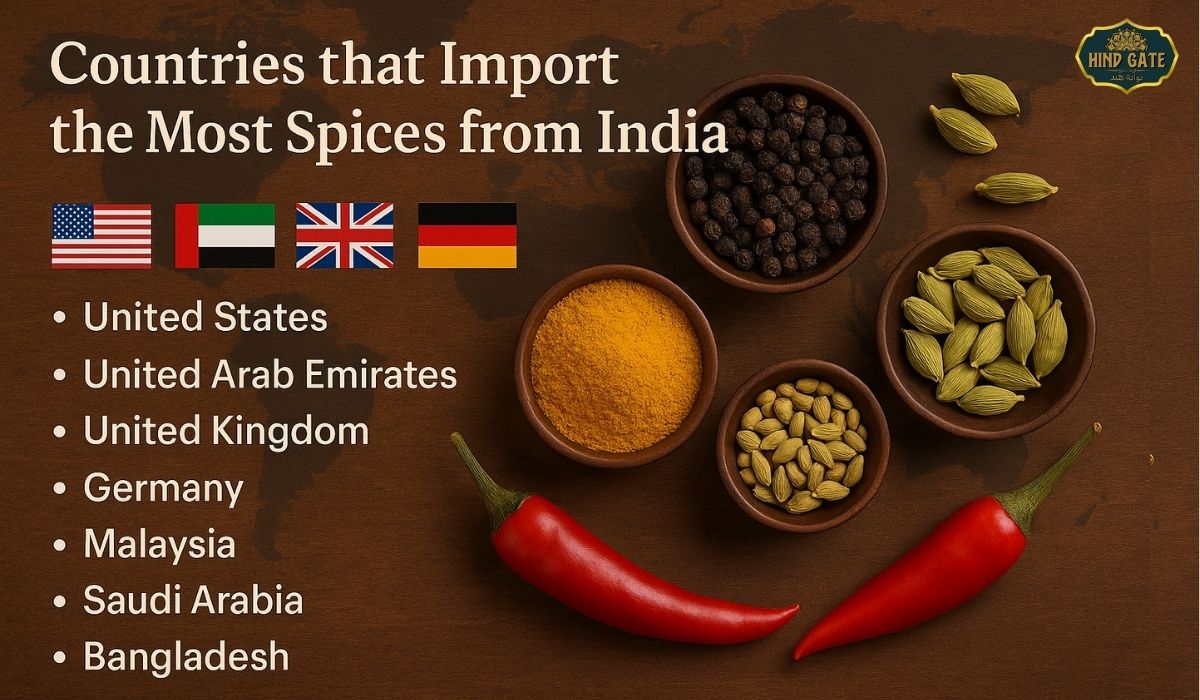
Countries that Import the Most Spices from India
- • United States
- • United Arab Emirates
- • United Kingdom
- • Germany
- • Malaysia
- • Saudi Arabia
- • Bangladesh
- • Sri Lanka
Additionally, customizing your export strategy to suit the regulations of these countries can help you grow faster.
How Profitable is the Spice Export Business?
The spice export business can be highly profitable due to low input costs and high global demand. Furthermore, typical profit margins range from 15% to 40%, depending on the product, packaging, volume, and logistics.
Key profitability tips:
- Focus on organic and high-demand spices
- Build strong relationships with farmers and suppliers
- Invest in quality control and branding
Challenges and Tips for First-Time Exporters
Common Challenges
- →Complex documentation
- →Delayed payments or order cancellations
- →International compliance issues
- →Fluctuating freight costs
Tips to Succeed
- →Start with small sample orders
- →Work with an experienced freight forwarder
- →Get export insurance
- →Keep learning through APEDA and Spice Board training programs
Spice Export Documentation Table
| Document Name | Purpose | Issuing Authority |
|---|---|---|
| Import Export Code (IEC) | Mandatory for all exporters | DGFT |
| GST Registration Certificate | Required for tax compliance | GST Portal |
| FSSAI License | Ensures food safety compliance | FSSAI |
| APEDA Registration | Mandatory for agro-food exporters | APEDA |
| CRES Certificate | Spices Board certification for spice exporters | Spices Board of India |
| Commercial Invoice | Details product, quantity, and price | Exporter |
| Packing List | Lists packaged contents for customs and buyers | Exporter |
| Bill of Lading/Airway Bill | Shipping document issued by freight carrier | Shipping Line / Airline |
| Certificate of Origin | Confirms country of origin for trade regulations | Chamber of Commerce |
| Phytosanitary Certificate | Declares products are pest/disease-free (if applicable) | Plant Quarantine Authority of India |
| Letter of Credit or PO | Buyer's agreement to purchase | Buyer / Exporter Agreement |
Conclusion
India’s spices export from India business is filled with opportunities for entrepreneurs and small businesses. With the right approach, proper documentation, and effective marketing, you can build a sustainable and profitable export venture. Furthermore, stay on top of changing regulations, ensure product quality, and focus on building global relationships in order to succeed over the long term.
Ready to buy premium Indian spices or launch your export business? Tap the WhatsApp button now to connect with our experts for sourcing, licensing, and full export support.
Need Export Assistance?
Contact our experts today