


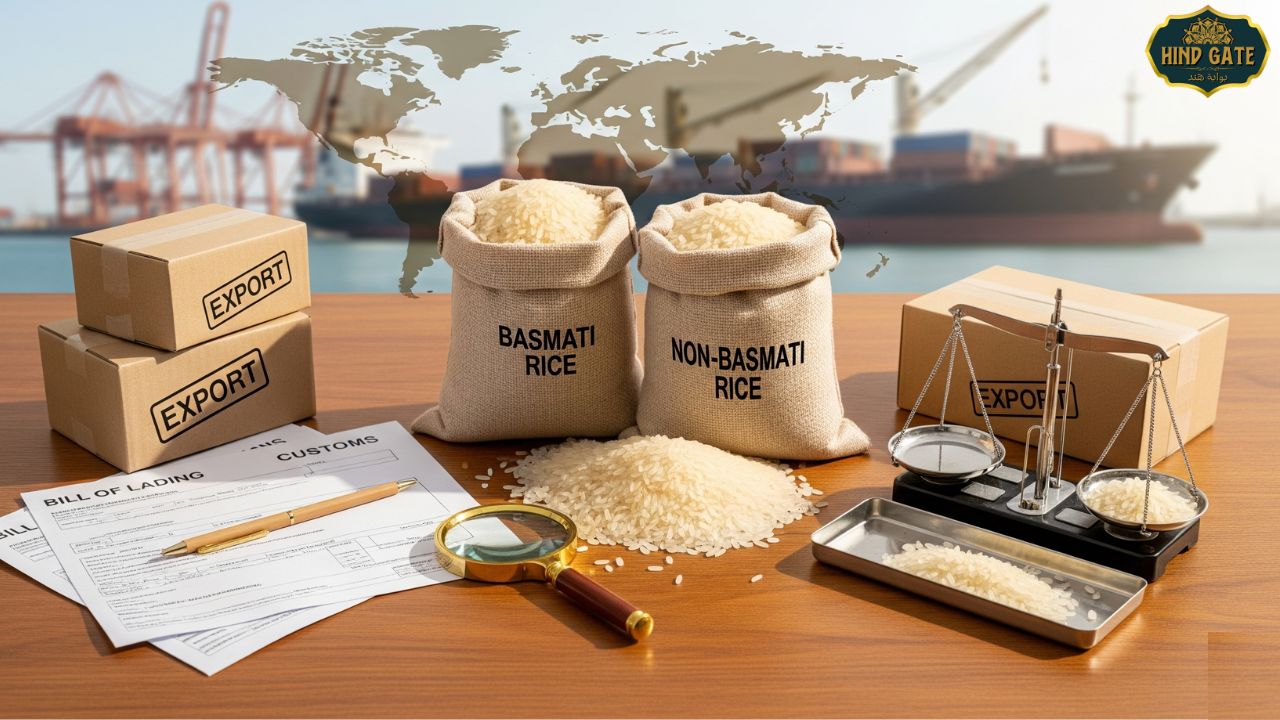
How to Export Rice from India? Complete Step-by-Step Guide
India is the largest exporter of rice in the world, accounting for over 40% of the global rice trade. With an increasing global demand for both Basmati and non-Basmati varieties, many entrepreneurs and agribusinesses are exploring how to export rice from India successfully.
Further, this guide provides a step-by-step breakdown of the rice export procedure, documentation requirements, major markets, and best practices to help you start your rice export journey.
Introduction
Rice is one of India’s most significant agricultural export commodities. The country exports rice to more than 150 countries, including the Middle East, Africa, Europe, and Southeast Asia. Indian Basmati rice, with its distinct aroma and long grains, is particularly popular in premium markets. Non-Basmati rice also finds large-scale buyers in developing countries due to its affordability.
Exporting rice from India involves a combination of licensing, quality assurance, compliance with international trade laws, and efficient logistics. In addition, regardless of whether you are a farmer, a trader, or an export house, this guide will help you navigate the process. If you’re exploring other export avenues, you might also be interested in learning how to export spices from India.
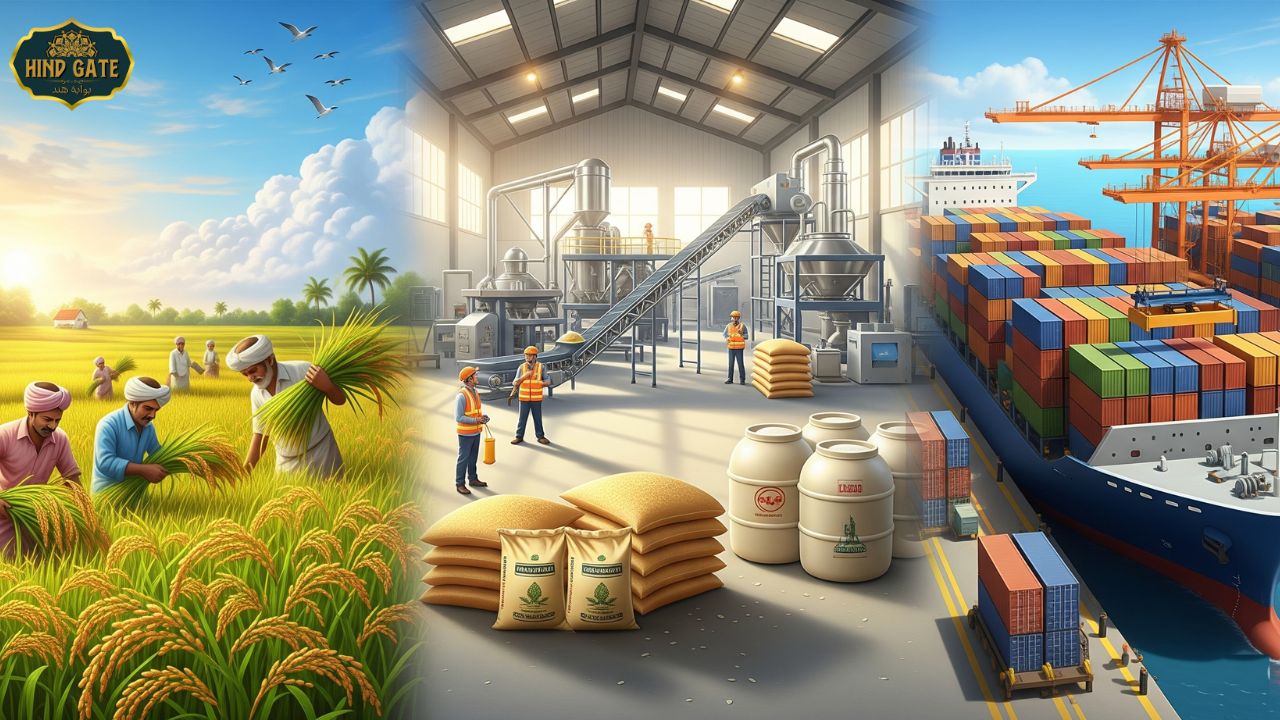
Types of Rice Exported from India
| Type of Rice | Description | Major Export Markets |
|---|---|---|
| Basmati Rice | Aromatic, long-grain rice with premium quality | UAE, Saudi Arabia, Iran, UK |
| Non-Basmati Rice | Affordable, includes varieties like Sona Masoori | Africa, Bangladesh, Nepal |
| Parboiled Rice | Semi-boiled before milling, nutrient-rich | Benin, Senegal, UAE |
| White Rice | Milled and polished, widely consumed | South Africa, Malaysia, Qatar |
| Brown Rice | Whole grain rice with bran layer intact | USA, Germany, Canada |
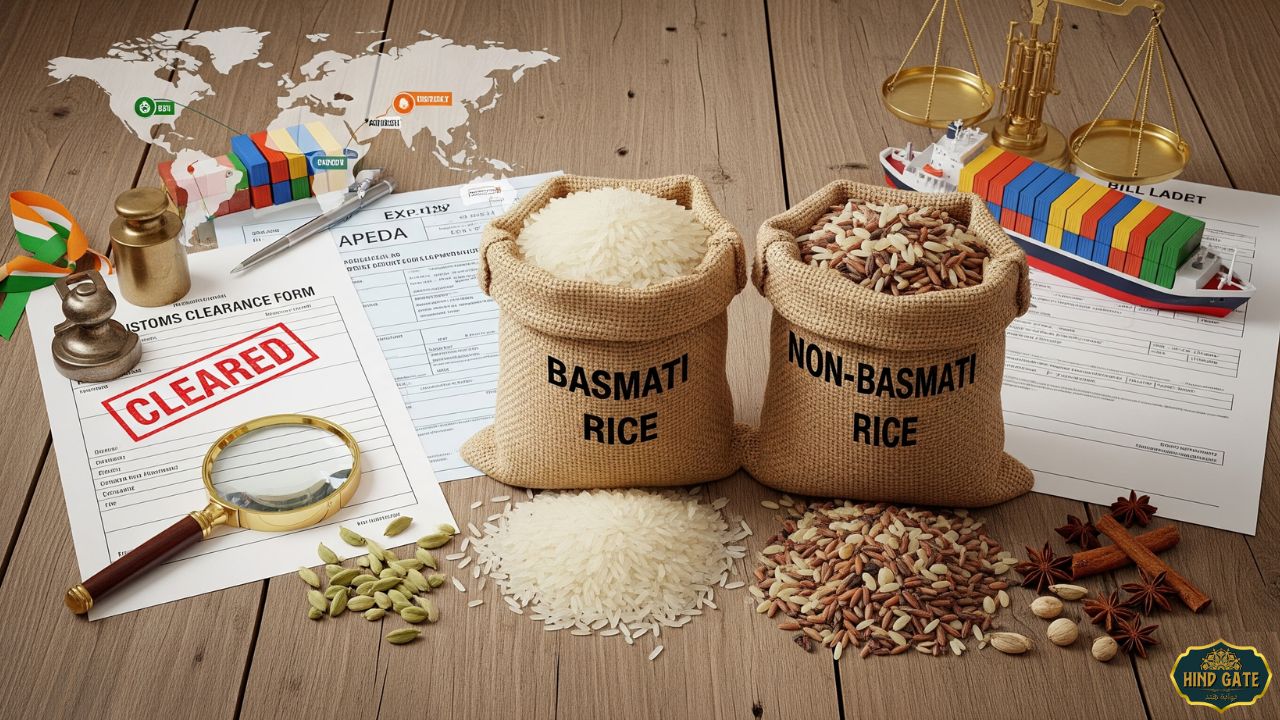
Step-by-Step Rice Export Process from India
1. Register Your Business and Obtain Licenses
To start exporting rice, you must:
- Register your business (as Proprietorship, Partnership, or Pvt Ltd)
- Obtain Import Export Code (IEC) from DGFT
- Register with APEDA (Agricultural and Processed Food Products Export Development Authority)
- Apply for FSSAI License
- Get GST Registration
2. Quality Certification and Grading
Rice exported from India must meet international quality standards. Get your rice tested and certified for:
- Grain length
- Moisture content
- Purity and cleanliness
- Foreign matter
Additionally, APEDA supports sample testing and grading. Certification helps ensure buyer confidence and smoother customs clearance.
3. Choose Your Rice Variety and Source
Work with reliable rice mills or farmers to procure the right rice variety. Decide whether you want to export:
- Bulk Basmati for premium markets
- Affordable non-Basmati for large volume exports
- Specialty or organic rice for niche markets
Tip: Establish long-term procurement contracts with trusted suppliers.
4. Packaging and Labelling Requirements
International buyers expect proper packaging to retain rice quality. Use:
- 25kg, 50kg food-grade bags or bulk containers
- Moisture-proof and tamper-evident packaging
- Printed labels with product details, origin, weight, expiry date, batch code
5. Find Buyers for Indian Rice
You can find rice buyers through:
- B2B portals (e.g., Alibaba, IndiaMART, TradeIndia)
- Export fairs and food expos
- Trade missions and government export promotion councils
- Partnerships with experienced rice exporters like Hind Gate
Furthermore, offering free samples and competitive pricing helps build initial trust. Some exporters also diversify by engaging in export tea from India, which has overlapping buyer bases.
6. Logistics and Shipment
For rice export, sea freight is the most common shipping method due to volume. Follow these steps:
- Book containers and shipping lines
- Work with CHA (Customs House Agent) for documentation
- Ensure fumigation and inspection by port authorities
Documents required:
- Commercial Invoice
- Packing List
- Certificate of Origin
- Bill of Lading
- Phytosanitary Certificate
- Insurance Policy
7. Payment and Legal Compliance
Choose safe payment methods such as:
- Letter of Credit (LC)
- Advance TT (Telegraphic Transfer)
- Escrow or payment gateway (for small shipments)
Ensure your contracts comply with:
- Indian Foreign Trade Policy
- Customs Act
- Destination country import regulations
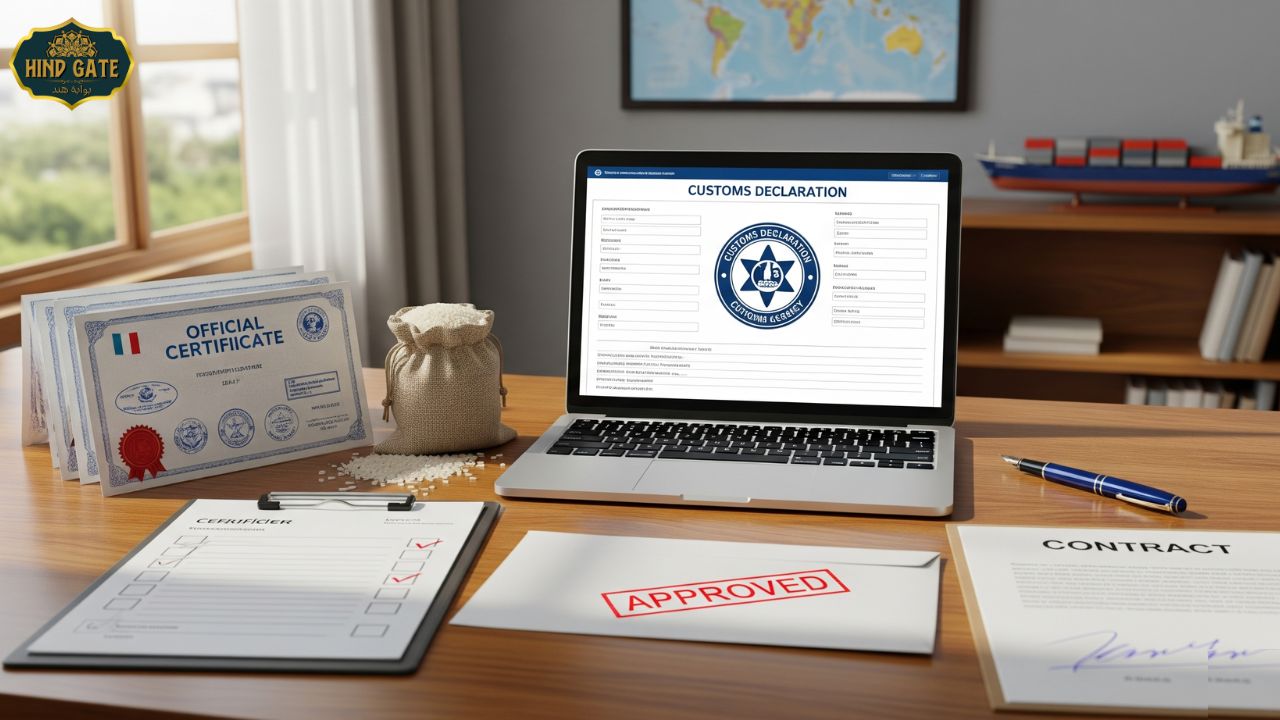
Documents Required to Export Rice from India
Before starting your rice export business, ensure you have all mandatory paperwork in place. Additionally, below you will find a complete list of documents required to export rice from India, along with a brief description:
- Import Export Code (IEC) – Mandatory code from DGFT for all export businesses.
- APEDA Registration Certificate – Registration with APEDA for agricultural product exports.
- FSSAI License – Approval from Food Safety Authority for exporting edible products.
- GST Certificate – Proof of GST registration for taxation compliance.
- Commercial Invoice – Detailed bill for the goods sold to the buyer.
- Packing List – Itemized list of products and quantities in each shipment.
- Certificate of Origin – Proof that the rice was produced in India.
- Phytosanitary Certificate – Confirms the rice is pest-free and safe for export.
- Bill of Lading – Shipping document issued by the carrier for goods in transit.
- Quality Certificate (if required) – Confirms rice meets buyer’s quality standards.
- Insurance Policy (optional) – Protects shipment against loss or damage during transit.
Additionally, these documents guarantee smooth clearance and compliance with international standards.
Major Importing Countries of Indian Rice
| Country | Preferred Variety | Market Trend |
|---|---|---|
| Iran | Basmati | High and consistent |
| Saudi Arabia | Basmati | Premium market |
| UAE | Parboiled, Basmati | Strong demand |
| Bangladesh | Non-Basmati | Seasonal demand |
| Benin | Parboiled | Bulk imports |
| South Africa | White Rice | Growing market |
| USA | Organic, Brown Rice | Niche health market |
Why Export Rice with Hind Gate?
Hind Gate offers end-to-end rice export solutions from India. Here’s why businesses trust us:
- Sourcing from certified rice mills
- Packaging, fumigation, and shipping support
- Assistance with APEDA and IEC registration
- Global buyer network
- Dedicated export documentation experts
Businesses that also deal in export coffee from India trust Hind Gate for its reliability and international compliance standards.
Conclusion
India continues to lead the global rice trade with unmatched quality, diversity, and growing international trust. Whether you’re exporting Basmati rice to the Middle East or non-Basmati varieties to African markets, the potential for expansion remains strong. Moreover, with the right licenses, export documentation, quality assurance, and a reliable logistics strategy, tapping into global markets becomes much easier.
Additionally, many successful exporters diversify their portfolios by exploring other high-demand agri-products like export pulses from India. Doing so strengthens market reach and enhances business sustainability in the long run.
For expert guidance, documentation support, and reliable rice export solutions, connect with Hind Gate today and take the next step in building a profitable agri-export business.
Ready to Export Tea with Confidence?
Get personalized assistance from our tea export specialists