


How to Export Rice From India to UK?
The global rice trade is heavily influenced by India’s strong production capacity and export leadership, supplying premium basmati and non-basmati varieties to markets worldwide. Among these destinations, the United Kingdom stands out as a high-potential market where demand continues to rise due to multicultural food preferences, expanding retail distribution, and a thriving restaurant sector that values authentic grain quality.
For exporters and agri-businesses aiming to scale internationally, entering this market can be highly rewarding. However, success depends on understanding regulations, documentation, logistics, and buyer expectations. However, this practical guide outlines everything that businesses need to know in order to succeed and grow efficiently when exporting rice from India to the UK.
Why the UK Is a High-Demand Market for Indian Rice?
The UK imports large volumes of rice every year because domestic production is limited. Importers rely on trusted international suppliers to meet demand from households, wholesalers, and restaurants.
Key reasons exporters target the UK market:
- High demand for basmati and long-grain rice
- Stable import policies and transparent trade system
- Growing popularity of international cuisines
- Strong retail and foodservice distribution channels
Because of these factors, many suppliers who already export rice from India to global markets consider the UK a priority destination for expansion.
Types of Rice Exported from India to the UK
Understanding product selection is essential for success. Buyers in the UK prefer different varieties depending on their target customers.
Commonly exported varieties include:
1. Basmati Rice
Premium segment rice known for aroma, long grains, and fluffy texture after cooking. This is the most demanded variety in the UK.
2. Non-Basmati Long Grain Rice
Used widely by wholesalers and food manufacturers because of its affordability and consistent quality.
3. Sona Masoori Rice
Popular among health-focused consumers and South Indian communities.
4. Parboiled Rice
Preferred by restaurants and catering companies for its firmness and cooking stability.
Exporters offering multiple types of rice in India often gain more buyers because they can supply diverse market segments.
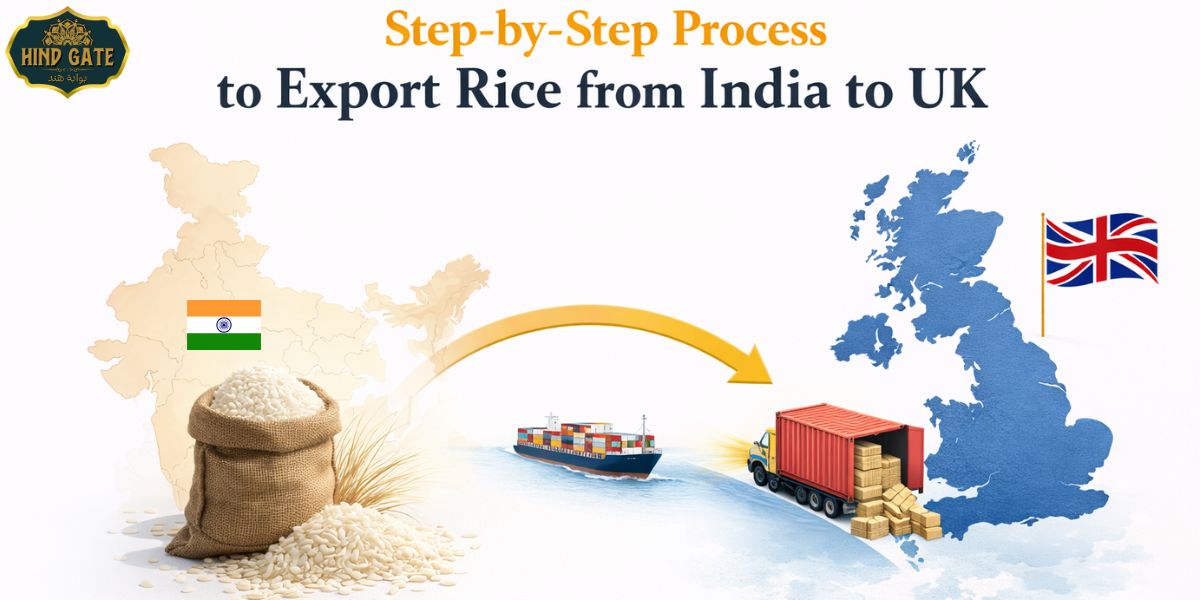
Step-by-Step Process to Export Rice from India to UK
Successful exporting depends on following a structured process. Below is the simplified workflow used by experienced exporters.
Step 1 — Register Your Export Business
To start exporting legally, you must obtain:
- Import Export Code (IEC)
- Business registration certificate
- GST registration (if applicable)
Step 2 — APEDA Registration
Rice exporters must register with APEDA (Agricultural & Processed Food Products Export Development Authority). This registration confirms that the exporter complies with quality and export regulations.
Step 3 — Product Selection & Quality Testing
Rice must meet international standards such as:
- Moisture level limits
- Broken grain percentage
- Purity level
- Grain length specification
Professional exporters conduct laboratory testing before shipment to avoid rejection.
Step 4 — Packaging & Labeling Requirements
The UK has strict packaging rules. Labels must include:
- Product name
- Country of origin
- Net weight
- Batch number
- Importer details
- Nutritional information
Proper packaging improves shelf appeal and prevents damage during transit.
Step 5 — Find Buyers in the UK
Reliable buyers can be found through:
- International trade exhibitions
- Import directories
- Distributor networks
- Direct outreach
Exporters who already work with international clients such as rice importers in Dubai often use those global contacts to enter new markets like the UK.
Step 6 — Shipping & Logistics
Rice exports to the UK usually move through sea freight. Major Indian ports used:
- Mundra
- Nhava Sheva
- Kandla
- Chennai
Transit time averages 25–35 days, depending on route and shipping line.
Documents required for exporting rice to UK from India
Accurate paperwork ensures smooth customs clearance. Essential export documents include:
- Commercial Invoice
- Packing List
- Bill of Lading
- Certificate of Origin
- Phytosanitary Certificate
- Insurance Certificate
- Export Declaration
Missing or incorrect documents can cause shipment delays or penalties.
UK Import Regulations for Rice
The UK maintains strict food safety standards for imported agricultural products. Exporters must ensure:
- Compliance with pesticide residue limits
- Proper fumigation certification
- Approved packaging materials
- Accurate labeling format
Importers may also request third-party inspection reports to verify quality before shipment.
Price Factors for Rice Export to UK
Rice pricing varies depending on multiple factors:
| Factor | Impact on Price |
|---|---|
| Rice variety | Premium varieties cost more |
| Packaging | Retail packs cost more than bulk |
| Order volume | Large orders reduce price per ton |
| Freight cost | Shipping rate fluctuations affect total cost |
| Quality grade | Higher grades command higher prices |
Indicative price ranges (approximate):
| Rice Type | Price per MT |
|---|---|
| Premium Basmati | $900–$1300 |
| Standard Basmati | $800–$1100 |
| Non-Basmati | $400–$650 |
Prices fluctuate based on global demand, harvest output, and freight charges.
How to Find Reliable UK Rice Buyers?
Finding trustworthy buyers is one of the most important steps. Reliable importers typically include:
- Ethnic food distributors
- Supermarket suppliers
- Restaurant wholesalers
- Private-label brands
Professional exporters build long-term relationships rather than one-time deals. Additionally, many companies exporting basmati rice from India to the UK enjoy greater success by focusing on repeat clients and consistent quality.
Sea Freight vs Air Freight for Rice Export
| Shipping Type | Best For | Delivery Time |
|---|---|---|
| Sea Freight | Bulk shipments | 25–35 days |
| Air Freight | Samples or urgent orders | 3–5 days |
Sea freight is preferred because it is far more cost-effective for large quantities.
Common Export Challenges and How to Solve Them
Even experienced exporters face challenges. The key is preparation.
Quality Rejection Risk
Solution: Conduct a third-party inspection before shipping.
Payment Delays
Solution: Use secure payment methods such as a Letter of Credit.
Shipment Delays
Solution: Work with reliable freight forwarders.
Packaging Damage
Solution: Use export-grade packaging materials.
Planning ahead minimizes risk and improves buyer satisfaction.
Tips to Succeed in the UK Rice Market
Exporters who perform well in international markets follow proven strategies:
- Maintain consistent grain quality across shipments
- Offer multiple packaging sizes
- Provide private labeling options
- Respond quickly to buyer inquiries
- Share product samples before large orders
Additionally, businesses involved in related sectors such as coffee export from India or spice trade often expand faster because they already understand global logistics and compliance systems.
Expanding Beyond One Market
Many successful suppliers do not rely on a single destination. Instead, they diversify shipments to multiple countries. This approach stabilizes revenue and reduces dependency on one region.
For example, exporters may simultaneously supply:
- UK distributors
- Middle East wholesalers
- European retail chains
Diversification strengthens business sustainability and improves negotiating power with buyers.
Choosing the Right Export Partner Matters
Working with an experienced exporter or supplier directly affects:
- Product quality consistency
- Delivery reliability
- Compliance accuracy
- Brand reputation
Established suppliers usually offer:
- Certified processing facilities
- Standardized grading systems
- Export-grade packaging
- Dedicated logistics support
These capabilities make operations smoother and reduce risks for international buyers.
Future Demand for Indian Rice in the UK
Market trends show continued growth in rice consumption due to:
- Increasing multicultural population
- Rising demand for ready-to-cook meals
- Growth of restaurant chains
- Popularity of Asian and Middle Eastern cuisines
Additionally, because India is one of the largest rice producers in the world, it has a good chance of meeting this demand. Exporters who maintain quality and reliability can build strong, long-term trade relationships.
Why Choose Hind Gate General Trading LLC for Rice Export from India to UK?
Choosing a reliable rice export partner is essential for maintaining quality consistency, ensuring timely delivery, and complying with UK import standards. Global buyers trust Hind Gate General Trading LLC for its strong sourcing network, export expertise, and dependable logistics support.
Key Advantages for UK Rice Importers:
- Premium Rice Sourcing – Direct procurement from top rice-producing regions in India
- Export Compliance Support – APEDA-linked sourcing & international standard documentation
- Strict Quality Control – Checked for grain length, purity, aroma & moisture balance
- Competitive Global Pricing – Market-aligned export rates for bulk buyers
- International Trade Experience – Supplying clients across Europe, Gulf & Africa
- Efficient Logistics Coordination – Smooth shipping, tracking & after-shipment assistance
Business Edge:
Dubai trade presence ensures faster communication, reliable documentation handling, and streamlined export coordination for UK buyers seeking long-term Indian rice supply partnerships.
Final Thoughts
Exporting rice to the UK is a profitable opportunity for businesses that understand the correct procedures, compliance standards, and buyer expectations. In addition, every step from selecting varieties and preparing documents to managing logistics and building relationships with clients plays a role in long-term success.
Companies that consistently deliver quality, competitive pricing, and timely shipments stand out in global markets. With proper planning, strong partnerships, and attention to detail, exporters can scale their operations and build a reliable international rice trade business.
Ready to start importing premium Indian rice to the UK? Contact Hind Gate General Trading LLC today to get customized pricing, samples, and export consultation.
Looking for Reliable Rice Export from India to the UK?
Hind Gate General Trading LLC supplies premium export-quality rice with consistent grains, competitive pricing, and smooth logistics for dependable UK delivery.